Planning a kitchen or bathroom remodel in the South Puget Sound is an exciting journey. You likely have a vision of beautiful door styles, gleaming hardware, and stunning countertops. However, the structural integrity of your new space relies heavily on a component you rarely see but constantly use: the cabinet box materials.
For homeowners in Lakewood, Gig Harbor, and University Place, understanding the materials used to construct these boxes is vital for long-term satisfaction. A common misconception is that high-quality cabinets must be made entirely of solid wood. In modern construction, specifically for the cabinet box (the carcass), solid wood is rarely the superior choice.
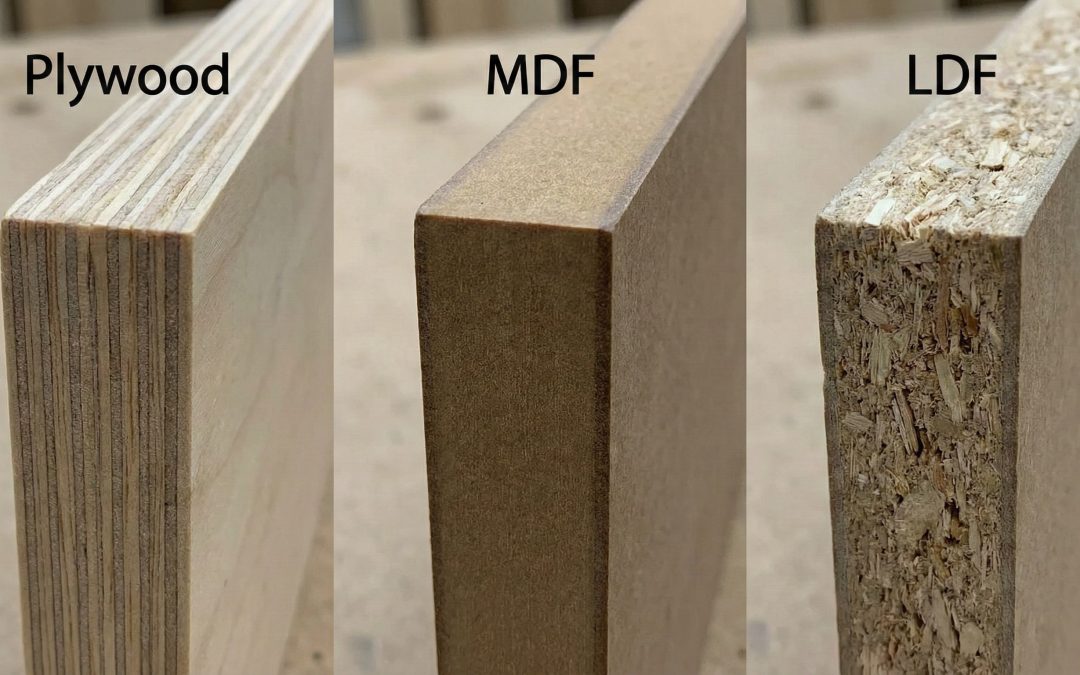
This guide breaks down the three primary contenders for cabinet box construction: Plywood, Medium Density Fiberboard (MDF), and Low Density Fiberboard (LDF). By understanding the pros and cons of cabinet box materials, you can make an informed decision that balances budget, durability, and style for your home.
Table of Contents
Why Solid Wood is No Longer the Standard in Cabinet Box Materials
Many clients initially ask Bandido Solutions for "solid wood cabinets" throughout the entire build. While solid wood is an excellent choice for cabinet doors, face frames, and drawer fronts, it is generally a poor choice for the cabinet box itself.
The primary reason is the nature of wood. Solid wood is a living material that expands and contracts with changes in humidity and temperature. In the Pacific Northwest, where moisture levels fluctuate significantly between our wet winters and warm summers, solid wood boxes are prone to warping, cupping, and cracking.
If a cabinet box warps even slightly, it can throw the doors out of alignment and cause drawers to stick. Engineered wood products like Plywood, MDF, and LDF were developed to solve this engineering challenge. They provide a stable, uniform platform that resists the structural shifts common in solid lumber. This stability ensures that your investment remains functional and beautiful for decades.
Understanding Plywood: The Strong and Water-Resistant Contender

Plywood is often considered the premium standard for cabinet boxes in custom remodeling. It is an engineered wood product made by stacking thin layers of wood veneer (plies) in alternating directions and bonding them with adhesive under heat and pressure.
The cross-grain construction gives plywood incredible strength and stability. For homeowners in Steilacoom or Pierce County looking for top-tier durability, plywood is often the material of choice. It holds screws exceptionally well, which is important for securing heavy hardware and ensuring cabinets stay firmly attached to the wall studs.
Plywood is also highly resistant to moisture compared to other engineered materials. While no wood product is entirely waterproof, marine-grade or high-quality furniture-grade plywood can withstand the occasional leak under a sink better than fiberboard options. Additionally, plywood is lighter than MDF, which puts less stress on hanging rails and installation points.
However, plywood does have natural imperfections. Even high-grade plywood may have voids or knots in the inner layers, and the surface grain can sometimes telegraph through thin veneers or finishes. It is also generally the most expensive of the three options, which can impact the overall budget of your renovation.
Exploring MDF: The Smooth and Stable Favorite

Medium Density Fiberboard, or MDF, is a heavy hitter in the cabinet industry and a material Bandido Solutions utilizes frequently for specific applications. MDF is an engineered composite made by breaking down hardwood and softwood residuals into wood fibers. These fibers are combined with wax and a resin binder, then formed into panels by applying high temperature and pressure.
The result is a panel that is denser than plywood and significantly smoother. Because it has no grain, MDF provides a pristine surface for painting. If you are dreaming of a sleek, painted kitchen in a modern matte finish, MDF ensures a glass-like smoothness that plywood cannot always guarantee.
Structurally, MDF is very consistent. It does not have the voids or knots found in plywood. It is extremely stable and will not expand or contract significantly with temperature changes. This makes it a fantastic choice for cabinet sides that will be painted to match the doors.
The downsides to MDF include its weight. It is very heavy, which makes installation more labor-intensive. It is also susceptible to water damage if the seal is penetrated. If water gets into the core of MDF, it can swell like a sponge and cannot be repaired. Furthermore, while it holds structural fasteners well, it is not as forgiving as plywood if you need to re-drill screws.
Looking at LDF: The Budget-Friendly Option

Low Density Fiberboard (LDF), often referred to as particle board or furniture board, is the most economical choice for cabinet boxes. It is constructed similarly to MDF but with larger wood particles and less density. It is almost always covered with a melamine laminate layer, which provides a durable, easy-to-clean interior surface.
For a budget-conscious remodel or a project where cost control is the primary driver, LDF is a valid option. The technology behind particle board has improved over the years. Modern industrial-grade particle board is much stronger than the materials used decades ago. When properly sealed and installed, it provides a flat, stable box that functions adequately for general storage.
However, Bandido Solutions advises clients to be cautious with LDF in high-moisture zones. It has the lowest resistance to water among the three materials. A persistent leak under a kitchen sink can ruin an LDF cabinet floor quickly, causing the material to crumble. It also has the weakest screw-holding power. Over time, heavy doors or drawers may loosen, and repairing stripped screw holes in LDF is difficult.
While it serves a purpose in the market, LDF is generally found in stock or big-box store cabinetry rather than custom projects. It offers the lowest longevity but allows for significant cost savings.
Comparing the Cost and Longevity in the Pacific Northwest
When Bandido Solutions plans a project with a homeowner, the local climate is always a factor. The South Puget Sound region is beautiful, but the humidity is a reality.
Cost Hierarchy:
- Plywood: Highest cost, highest return on investment regarding longevity.
- MDF: Mid-range cost, excellent value for painted finishes.
- LDF: Lowest cost, shortest lifespan.
In terms of longevity in a Lakewood or Tacoma home, plywood reigns supreme due to its ability to handle the ambient moisture without degrading. MDF is a close second, provided it is well-sealed and kept dry. LDF is the most risky in wet environments like bathrooms or laundry rooms.
Safety is another factor to consider. Engineered woods use adhesives that can release volatile organic compounds (VOCs). However, strict regulations, such as those outlined by the EPA regarding Formaldehyde Emission Standards, ensure that modern US-made materials are safe for indoor use. Bandido Solutions sources materials that meet or exceed these safety standards to protect your family.
The Bandido Solutions Advantage: Custom Cabinetry Built for You

What sets Bandido Solutions apart in the crowded remodeling market is the ability to design, build, and finish custom cabinetry in-house. Many contractors order pre-made boxes from third-party manufacturers, limiting your choices to what is available in a catalog.
Bandido Solutions operates differently. By controlling the manufacturing process, the team can mix and match materials to suit your specific needs and budget. For example, a client might choose high-grade plywood for the sink base and wall cabinets to ensure structural rigidity and water resistance, while utilizing high-quality MDF for center islands to achieve a flawless painted finish.
This hybrid approach allows for a tailored solution that optimizes your budget without sacrificing quality where it counts most. You are not just buying a product; you are partnering with craftsmen who understand the science behind the materials.
You can explore our services to see how this flexibility translates into stunning, durable kitchens and bathrooms. Whether you need a complete teardown or a strategic update, the focus remains on transparency and expert execution. Check out our blog for more helpful advice.
Choosing the Right Materials for Your Project
Selecting the right cabinet box materials is a balance of performance, aesthetics, and investment. Plywood offers rugged durability and water resistance. MDF provides stability and a superior finish for painted surfaces. LDF offers an entry-level price point for tight budgets.
Bandido Solutions is here to guide you through these technical choices, ensuring you understand exactly what is going into your home. By avoiding the "all solid wood" myth and embracing modern engineering, you ensure your remodel stands the test of time.
If you are ready to discuss your project and see these materials firsthand, contact Bandido Solutions today. Let Bandido Be Your Hero!